Kalalau Beach: The Whisper of Ancients, The Echo of the Sea
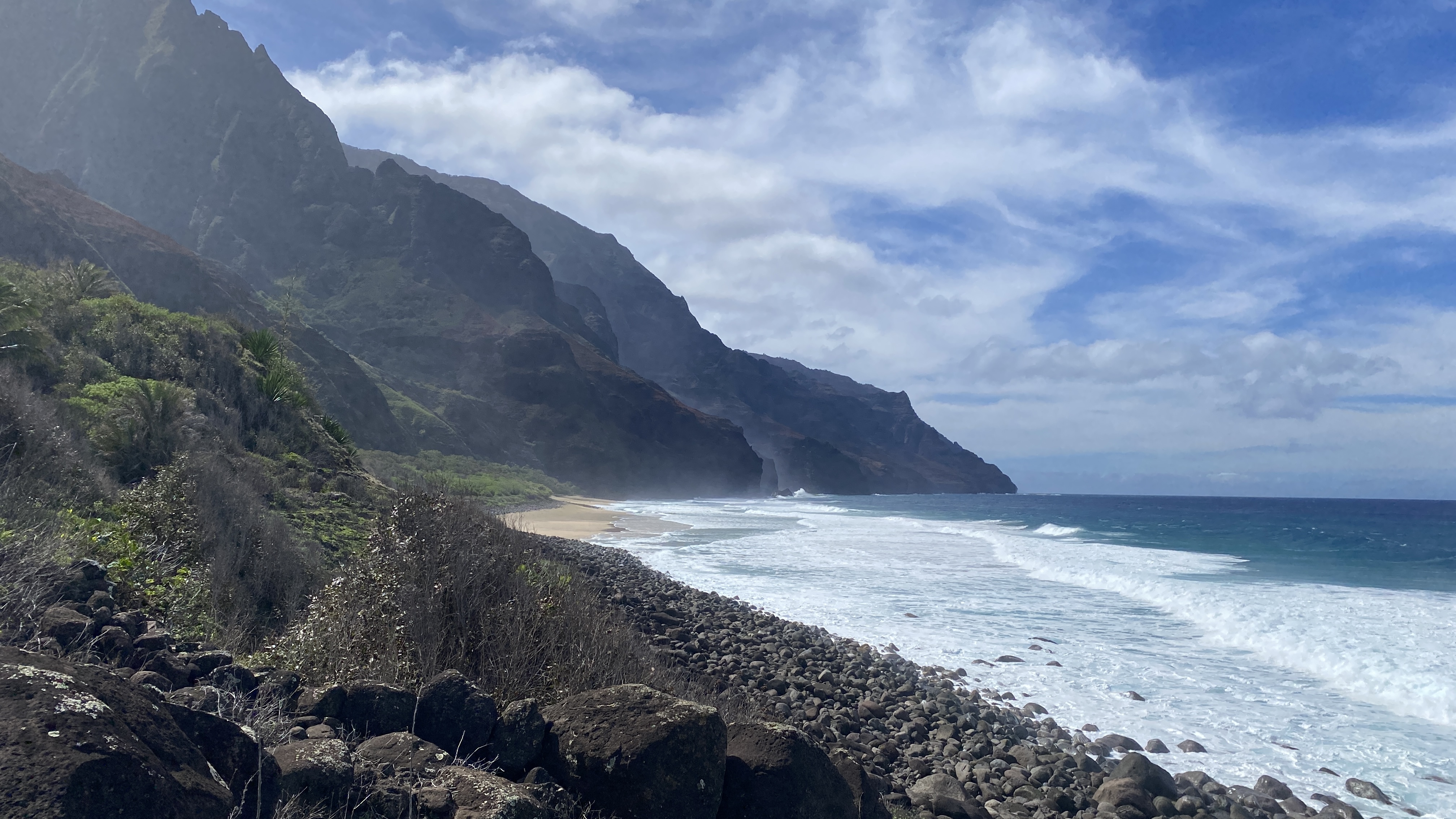
A Sacred Shoreline
Nestled beneath the towering cliffs of the Nā Pali Coast, Kalalau Beach is more than just a stunning stretch of sand. It is a place where time bends, where the ocean’s rhythm carries echoes of the past, and where history and legend intertwine in the salt-laden wind. For centuries, Kalalau has been a sanctuary, a place of solitude, and a bridge between the physical and the spiritual. But beyond its breathtaking beauty lies a story far older than any map or record.
The Birth of Kalalau: Myth and Creation
Hawaiian legend speaks of the Menehune, the mystical little people of the islands, known for their masterful engineering skills. Some say they built the ancient terraces hidden within the valley, remnants of a civilization that predates Polynesian settlers. Others believe Kalalau Beach itself was shaped by the gods, carved by the hands of the elements to exist as a place between worlds.
One tale tells of the mo‘o, the great water spirits, who dwelled in the freshwater caves along the cliffs. These guardians protected the valley’s sacred waters, ensuring the balance of life. Travelers who came with respect were granted safe passage, but those who sought to take without offering gratitude met the wrath of the rising waves, dragged into the sea where no canoe could return.
Even today, on quiet nights under the glow of a full moon, the wind carries the faint sound of chants—songs with no visible singer, prayers carried forward by the waves, lingering in the space between past and present.
The Forgotten Voices: Children of Kalalau
Before foreign ships arrived, before regulations and fences marked the land, Kalalau Beach was alive with the laughter of children. They ran along the shoreline, their footprints washed away by the tide, only to return with the dawn. Their songs were woven into the wind, singing of the great honu (sea turtles) that nested in the sand, of freshwater springs hidden beneath the cliffs, and of the guiding stars that led their ancestors across the Pacific.
Legends tell of ‘aumākua, ancestral spirits that watched over the valley. Some believed their souls resided in the towering cliffs, appearing as birds or flashes of light upon the waves. Those who slept on Kalalau Beach were said to dream not their own dreams, but those gifted by the land itself—visions of what once was and what could still be.
A Place Between Worlds
Kalalau Beach has always existed as a liminal space—a threshold between land and sea, between past and future. It is a place of transition, where those who arrive are not merely visitors but temporary keepers of its story.
For those who reach this shore, whether by foot or by wave, there is a moment of realization: Kalalau is not a destination; it is an experience. The air is thick with salt and memory, the cliffs stand as silent sentinels, and the vast Pacific stretches beyond the horizon, whispering of journeys yet to come.
But Kalalau does not welcome all. Those who come seeking conquest, possession, or personal gain do not stay long. The valley has its ways—storms that rise unannounced, tides that pull stronger than expected, trails that disappear in mist. To those who walk with reverence, Kalalau reveals itself, layer by layer, like a guardian choosing who is worthy of its secrets.
The Guardians of Kalalau
Today, Kalalau Beach remains a place of pilgrimage. Travelers from across the world make their way here, drawn by something unspoken. Some seek adventure, others solitude, but those who truly listen understand: they are not visitors, but participants in an ongoing story.
The true caretakers of Kalalau are not those who claim it, but those who respect it. They are the ones who walk barefoot through the valley, who remove what does not belong, who tread lightly knowing that every step carries a responsibility. They understand that Kalalau is not a place to be conquered or owned—it is a place to surrender to.
In the quiet hours, when the sun sets behind the cliffs and the stars emerge, those who listen can hear it—the deep breath of Kalalau, the slow pulse of the waves, the echo of footsteps that came before, and the promise of those yet to come.
Preserving Kalalau’s Legacy
Kalalau Beach is more than a stunning landscape; it is a living archive of time, a sacred space where nature and spirit intertwine. The responsibility to protect it does not come from law, but from understanding.
The valley does not ask for much—only that those who enter do so with humility, that they carry out more than they bring in, and that they leave no trace beyond the stories they whisper back to the wind.
For those who honor Kalalau, it will always be there, waiting.
#KalalauBeach #NapaliCoast #HawaiianLegends #AncientHawaii #HawaiiTravel #SacredLands #PolynesianHistory #EcoStewardship
Discussion: The Fate of Kalalau
×
Discussion: The Fate of Kalalau
  **Kaihewa:** Kalalau was once balanced. The land provided, and those who lived here respected it. They knew to give back.

  **Laʻakea:** But when more people came, that balance was broken. Some long-term dwellers stopped maintaining the land, and the valley became a refuge—not for caretakers, but for those who didn’t understand the responsibility.

  **Kahoku:** Then enforcement arrived. They cleared the illegal camps, thinking they were restoring order. But in reality, they removed the last of Kalalau’s stewards. Without those who knew the valley, the land became even more vulnerable.

  **Kaihewa:** Now, the boars have taken over. They root up the soil, tear out native plants, and cause landslides. Without people hunting them or keeping them in check, they’re destroying the valley from the inside out.

  **Laʻakea:** And the goats. They eat everything. They strip the hills bare, leaving no roots to hold the land together. The next heavy rain comes, and the cliffs crumble into the ocean.

  **Kahoku:** The state believes leaving Kalalau alone will heal it. But nature has always needed caretakers. The old Hawaiians knew this. They tended the land. Now, it’s left to ruin under the illusion of "preservation."

  **Kaihewa:** We need a new system. Not law enforcement. Not unrestricted access. Something in between. A way for true stewards to return.

  **Laʻakea:** Kalalau needs those who understand its spirit. Not just its beauty. People who know where the ancient loʻi fields were, who recognize the plants that belong and those that don’t.

  **Kahoku:** If we do nothing, Kalalau won’t just lose its forests and cliffs. It will lose its stories, its history. It will become another forgotten paradise.

  **Kaihewa:** The valley needs guardians. The right ones. The ones who remember.
/* Center the Button */ .modal-button-container { display: flex; justify-content: center; align-items: center; height: 100vh; }
/* Button - Natural Gradient */ .custom-modal-trigger { background: linear-gradient(90deg, #2a5934, #5a8b3d); color: white; font-size: 18px; padding: 12px 24px; border: none; border-radius: 8px; cursor: pointer; transition: transform 0.2s ease, box-shadow 0.3s ease-in-out; }
.custom-modal-trigger:hover { transform: scale(1.05); box-shadow: 0 0 15px rgba(90, 139, 61, 0.8); }
/* Modal Background */ .custom-modal { display: none; position: fixed; z-index: 1000; left: 0; top: 0; width: 100%; height: 100%; background: rgba(0, 0, 0, 0.85); backdrop-filter: blur(8px); justify-content: center; align-items: center; }
/* Modal Content */ .custom-modal-content { background: linear-gradient(135deg, #183a20, #3a7532, #6fa94e); color: #ffffff; padding: 30px; width: 90%; max-width: 600px; border-radius: 14px; text-align: left; box-shadow: 0 0 25px rgba(90, 139, 61, 0.6); transform: scale(0.7); opacity: 0; transition: transform 0.8s ease-out, opacity 0.8s ease-out; position: relative; }
/* Close Button */ .custom-close { position: absolute; top: 15px; right: 20px; font-size: 28px; font-weight: bold; color: #ffffff; cursor: pointer; transition: color 0.3s ease-in-out; }
.custom-close:hover { color: #ffd700; }
/* Scrolling Textbox */ .modal-text { max-height: 300px; overflow-y: auto; padding-right: 10px; margin-top: 15px; }
/* Scrollbar Styling */ .modal-text::-webkit-scrollbar { width: 6px; }
.modal-text::-webkit-scrollbar-thumb { background: #5a8b3d; border-radius: 6px; }
/* Open Modal Animation */ .custom-modal.show { display: flex; }
.custom-modal-content.show { transform: scale(1); opacity: 1; }
document.addEventListener(‘DOMContentLoaded’, function() { var modal = document.getElementById(‘customModal’); var openModalBtn = document.getElementById(‘openModal’); var closeModalBtn = document.querySelector(’.custom-close’);
// Show modal with animation
openModalBtn.addEventListener('click', function() {
  modal.classList.add('show');
  setTimeout(() => {
    document.querySelector('.custom-modal-content').classList.add('show');
  }, 100);
});

// Close modal with animation
function closeModal() {
  document.querySelector('.custom-modal-content').classList.remove('show');
  setTimeout(() => {
    modal.classList.remove('show');
  }, 400);
}

closeModalBtn.addEventListener('click', closeModal);
window.addEventListener('click', function(event) {
  if (event.target === modal) {
    closeModal();
  }
});
});